

Jungle Red!
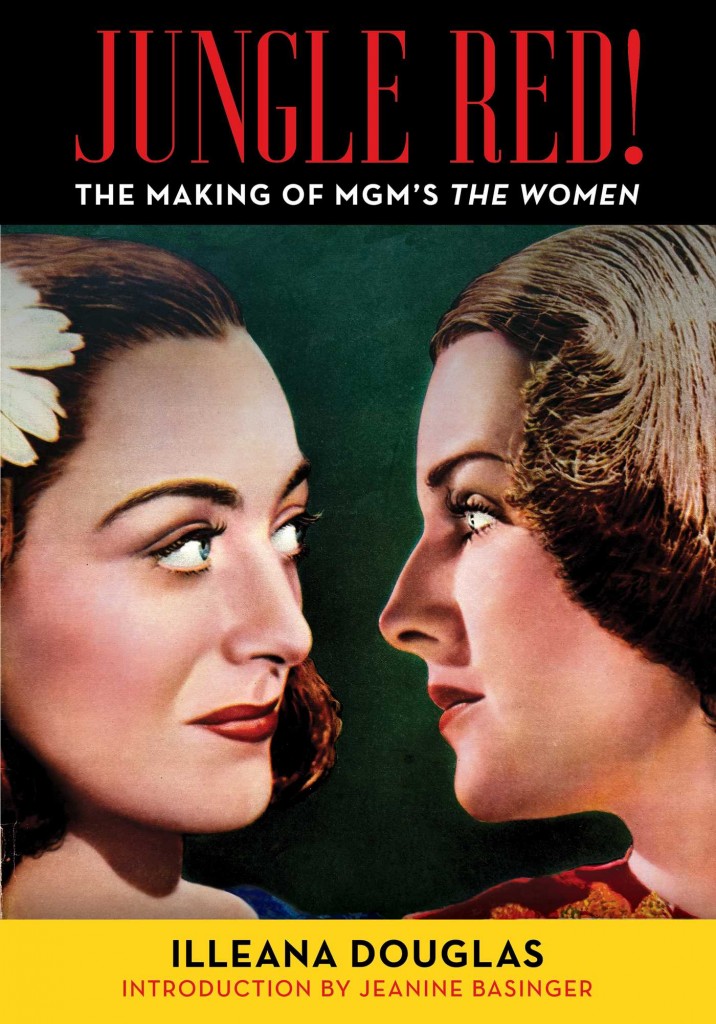
Some movies eek their way through the so-called Bechdel test. And then there’s The Women, MGM’s 1939 comedy of manners featuring a catty sea of dudettes and nary a single dude. Directed by George Cukor and based on the play by Clare Boothe Luce, the movie stars a bounty of Hollywood’s grandest female names of its time, among them Norma Shearer, Joan Crawford, Rosalind Russell and Paulette Goddard. It’s a trip.
Fans of the film and old Hollywood in general will feast on Jungle Red! The Making of MGM’s The Women, a definitive new account by the wonderful Illeana Douglas. It’s a juicy book, with captivating appearances by seemingly every player of the era. F. Scott Fitzgerald is there, in his Hollywood ruin; so is Time honcho Henry Luce, husband to the playwright herself. We learn of the movie’s fascinating screenwriter, Jane Murfin, and the Chaplin heroine Goddard, an oddly contemporary figure who pops off the page every time she turns up. There’s even a cameo from—are you sitting down?—Margaret Dumont’s tattoo.
Douglas handles her meaty material with flair. Of course, she’s a player herself—a veteran actor with a face familiar from movies (Cape Fear, Goodfellas, Ghost World) and TV (The Larry Sanders Show, Six Feet Under). She is the rare actor to have jumped into an author’s role so smoothly—Jungle Red! is Douglas’s third book, following the memoir I Blame Dennis Hopper and the lushly illustrated doorstopper Connecticut in the Movies. While her comfort with the film material comes naturally, her research acumen is commendable.
In New York? Well, who the hell isn’t?! On Sunday, October 4, Film Forum screens The Women, followed by a conversation between Douglas and Bruce Goldstein, the theater’s longtime Repertory Artistic Director. Get thee to the screening! And do yourself a favor and grab a copy of Jungle Red! The Making of MGM’s The Women—stat!
Bicycle Film Festival
Bicycles and movies are both urbane wonders that were hatched in the 19th century and maintain a vaguely surreal glow to this day. They pair together well, too, from the pitch-perfect Pee-wee’s Big Adventure on down. (From our perspective, Bicycle Thieves bows before Mr. Reubens, okay?)
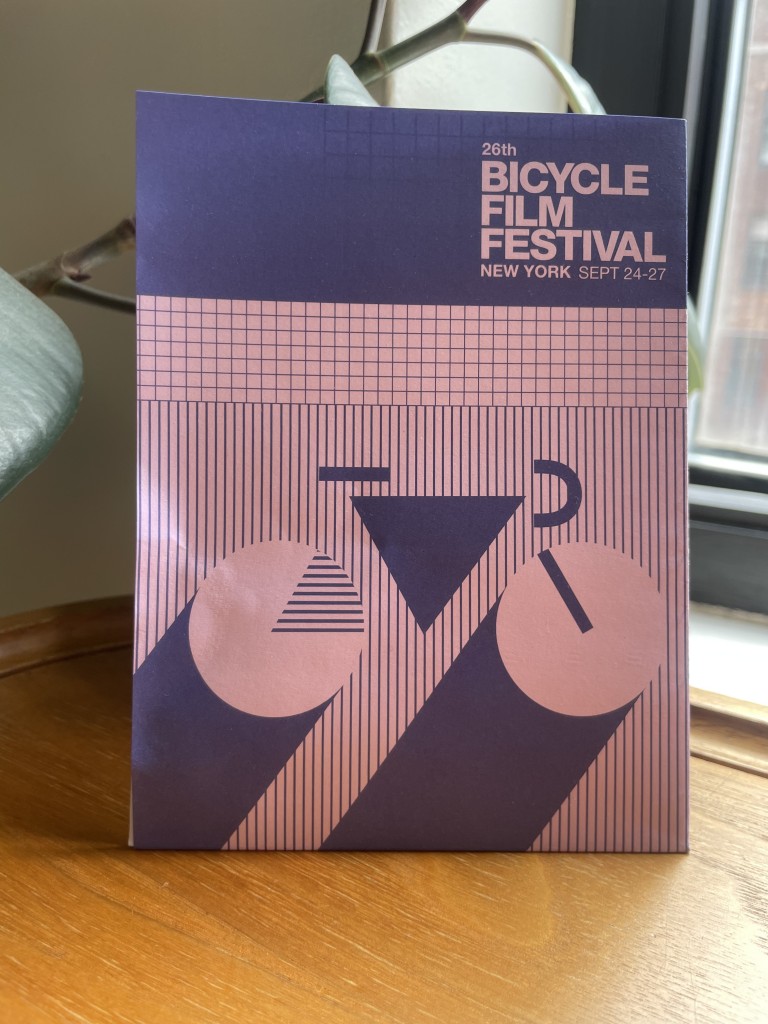
For the past quarter century, smart New Yorkers have gathered annually to celebrate bikes and movies in the fab Bicycle Film Festival. The festival was launched in 2001 after its founder, Brendt Barbur, was struck by a bus while on wheels and decided to find a silver lining in his misfortune. The festival has since popped up in different corners of the world—Cincinnati and Vancouver editions are coming up—while keeping a strong New York base. This week welcomes the Bicycle Film Festival’s 26th edition, September 24-27 at Ukrainian National Home. The festival’s slate includes nearly 50 shorts and feature films from both the States and abroad. It’s a characteristically quirky selection, including a one-minute quickie (La Vie en Rose), a short about a Chicago bike shop’s dog (Shop Dog: A Motley Movie), and Obsession: The Beryl Burton Story, a documentary about a cycling champion with a day job on a rhubarb farm. So don’t be lazy! Pick up a Bicycle Film Festival deluxe festival pass today! Bicycle parking is provided.
Zisk
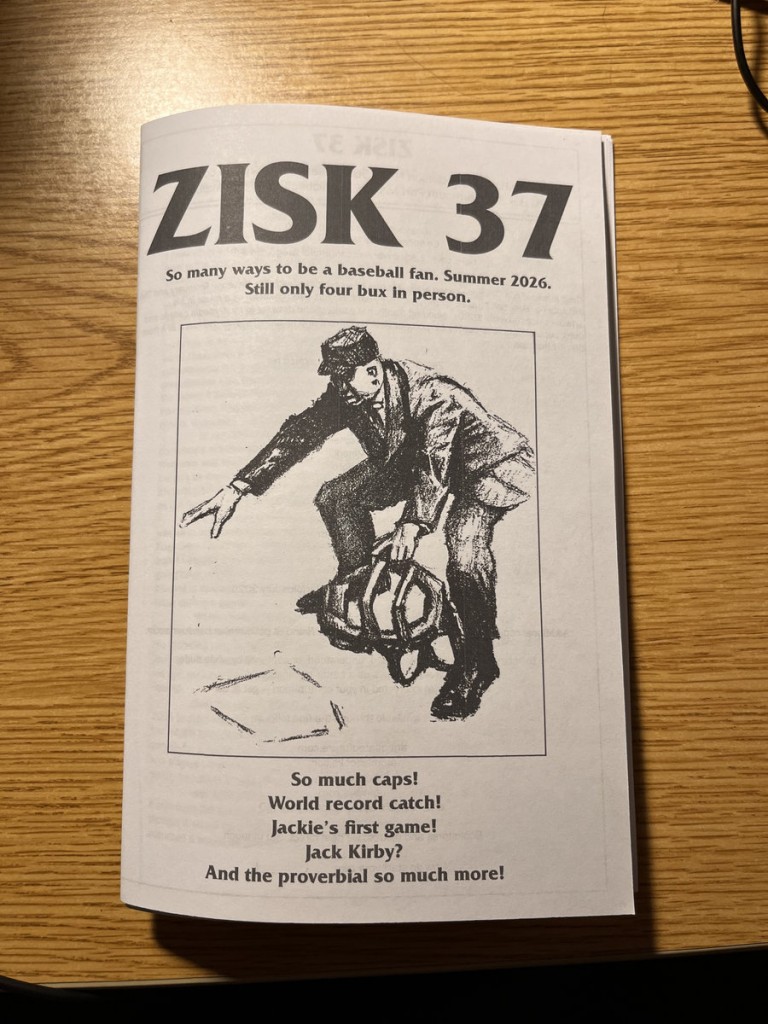
This year’s baseball season is nearing its finish line and, if we’re being honest, it’s been a bit of a snooze. Of course, such an impression may just be from the perspective of a Yankees fan—the biggest drama all season has involved a lollipop. Yet baseball, like comedy and rock and roll, springs eternal. Such is the takeaway from one of our favorite small publications, Zisk. The long-running baseball zine, edited by Mike Faloon and Michael T. Fournier, pops up about once per season these days. The new Zisk, issue #37, is characteristically loaded with small treasures that cover the spectrum of baseball fandom. In a pair of essays, writers discuss the underrated pleasure of switching team allegiances; a Wrigleyville bartender chronicles life working on the Cubs’ northside turf; even the humble game of catch gets put under the microscope. “Playing catch is one of the purest forms of human activity,” Rich Puerzer reasons. It is “an integral part of baseball, and baseball is not just a metaphor for life, it is life.” First uncorked in 1999, Zisk remains a huge seasonal treat. But don’t take it from us—get your hands on Zisk #37 today! Find it in smart zine-friendly stores, sharp distributors like Antiquated Future, or straight from Fournier’s Policymaker.
To Set
Dear Neighbors,
Ecosphere Productions is currently in its third season of “Do Not Cross,” a police procedural drama set in New York City. We will be filming on this block tomorrow and will be clearing and holding parking spots for the production’s equipment. Please be advised that if you park on the north side of the street, your car will be towed at the first sign of daybreak. If you park on the south side, it will be detonated.
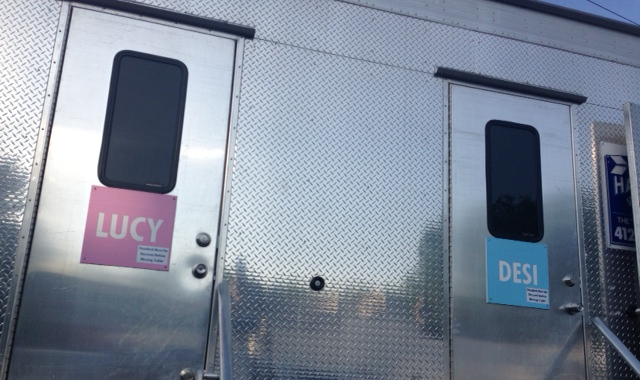
Our equipment will include a battery of hulking grey trucks, each capable of carrying enough electrical wire to extend back to the Coast, as well as an assemblage of vaguely creepy trailers. We also plan on erecting the saddest craft service table history has ever witnessed, placed on the sidewalk primarily to discourage passersby from dreaming about a life in the movies. Tomorrow’s featured entrées are off-brand Ritz crackers and recently expired coffee creamers.
The scene we are filming depicts an actor exiting a taxi and casually walking into a building. So, it’s a particularly demanding shot. We will begin preparations at dawn and plan to roll around suppertime. The episode takes place on a sunny summer morning, which is why we chose to shoot it on a gloomy October night. To create the illusion of daytime, we will be illuminating the entire block with a spotlight that approximates the incandescence of the sun itself. (Remember to wear protective sunglasses when traversing the area.)
The shoot will feature nobody famous or even remotely recognizable. All the people who look like they spent the day under a hooded hair dryer are actors portraying gritty undercover cops, while all the people who look like gritty undercover cops are members of the production crew.
For those of you with young children, know that, technically, watching us film will count toward their screentime allotment.
Every actor will carry a minimum of seven Anthora coffee cups. We are well aware that the cups have more or less vanished from New York at this point, along with the Greek diners that spawned them. This is mostly because the manufacturer cannot meet the demand from movies and TV shows that are set in New York and its many authentic Greek diners.
Each end of the block will be staunchly guarded by a 21-year-old wearing an officious-looking headset. These are our production’s interns, and we ask that you treat them with compassion as they earn college credit and learn about our industry. But know that, if you so much as think of entering the shot while we are rolling, they are authorized to stun you with a Taser gun.
Pedestrians are strongly discouraged from fleeing the havoc wreaked by our production by crossing to the other side of the avenue: Another film crew will be shooting a completely different program on that block, so it will be closed off, too. Please note that their set is so exacting to the standards of 1957 that by entering the shoot’s fragile ecosystem you will be considered a time traveler, carrying with you germs from the future.
If you happen to live on the lot—or “neighborhood,” as we are encouraged to call it—you have likely seen our show filming enough times that you can follow its various plot twists without actually having watched the program on TV. For those following, here’s a spoiler alert: In all likelihood, tomorrow’s shoot will never make it to air.
Silver Jubilee
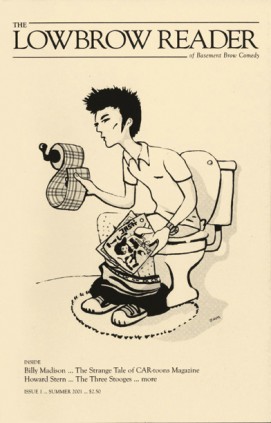
It has come to our attention that, somehow, the Lowbrow Reader has been publishing for 25 years. If you notice any unusual pomp and circumstance going on around your city—parades, mayoral proclamations and such—it is our silver jubilee. What an astonishing moment of productivity: Thirteen issues and a book, all squeezed into that narrow quarter century window. Mazel tov…to us! We’re wondering, just where were our so-called “competitors” at this stage of their existence? Well, Talk magazine had been closed for 23 years. Crazy had been quiet for 16 years, its Sylvester P. Smythe knockoff, Irving Nebbish, allegedly deceased. And what of your beloved Hustler? We don’t know! Simply Googling it skeeved us out too much. But we suspect, nothing good!
So raise your glass, remember that torrid August of 2001, and crack open a Lowbrow Reader. Or, if you want to celebrate in style, order a Lowbrow issue or book! And just think—where on earth will we be for our golden jubilee? America may be washed away by then, but with any luck, Lowbrow will be alive and kicking!
Souled American
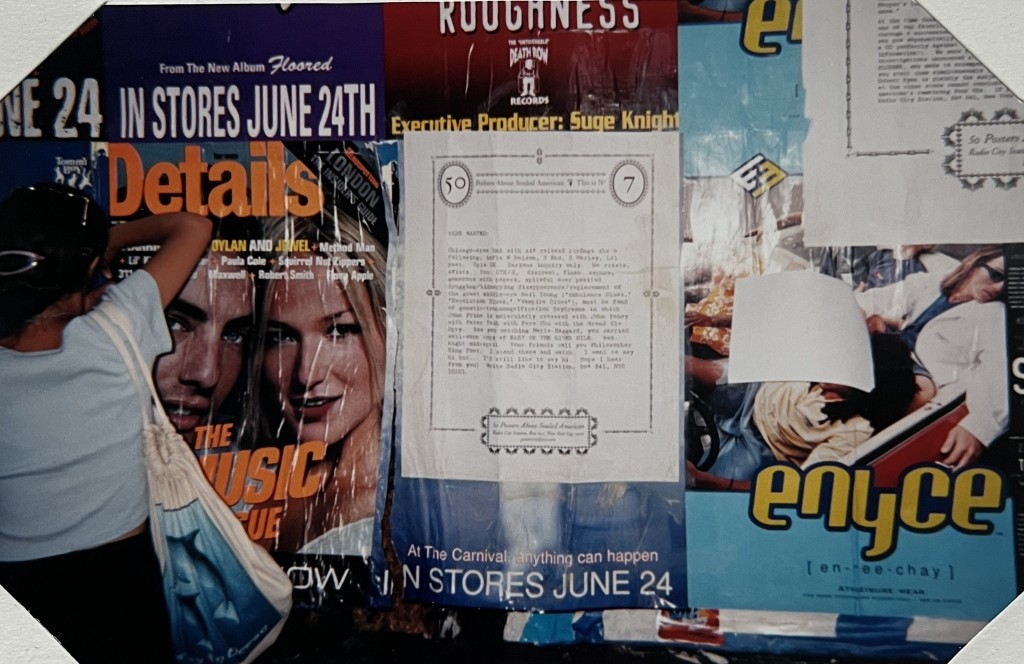
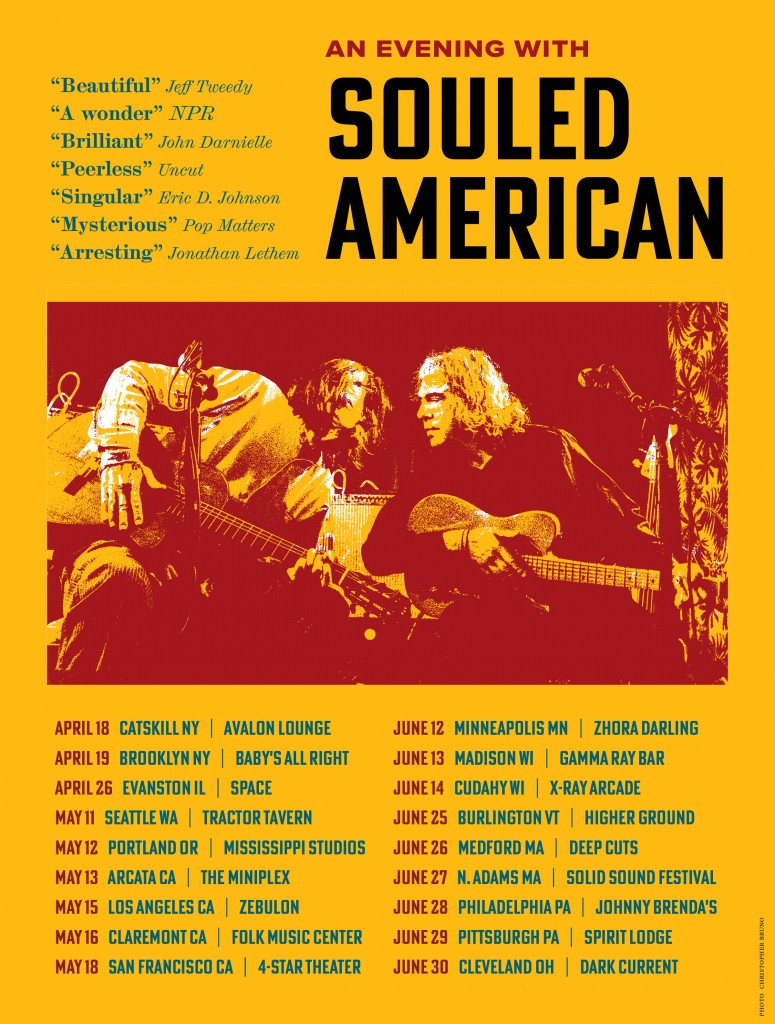
The band Souled American was a creature of Chicago’s heady music ecosystem of the late ’80s and early ’90s, releasing half a dozen albums between 1988 and 1995, each one capturing a sluggish and deeply secretive beauty. Although occasionally celebrated in the alt-country realm, the band was ultimately one of those genre-of-one entities: It subsisted outside the boundaries, doomed to flourish for the benefit of the few. Yet this band has a weird habit of wiggling out of hibernation. Perhaps its strangest turn of events came back in 1997, when the music novelist Camden Joy launched “Fifty Posters About Souled American.” Herein, a posse of enthusiasts (among them Jonathan Lethem and Richard Gehr) obliquely raved of Souled American’s music on posters that were pasted, guerilla-fashion, on the unsuspecting streets of New York.
Since then, the band, while never broken up, has popped up only intermittingly. Now comes Souled American’s grandest reemergence. Next week, Jealous Butcher Records will release Sanctions, the group’s absurdly belated seventh album. The record is time in a bottle—the core duo Chris Grigoroff and Joe Adducci seem untouched by the years. They’re as slow as ever, 33 1/3 creatures in a world set at 45. Again, Joy (the writer, if not the sentiment) is on hand, as the group’s personal Jon Landau. We heartily recommend seeking out this record! Just as cool? Souled American may be coming to your town: Starting on April 18 up in Catskill, New York, the duo rolls through the States, including a stop at Baby’s All Right in Brooklyn on April 19. Get thee out of the house to soothe your Souled. Check out Souled American pronto!
Cometbus
The wonderful journal Cometbus was hatched in the Bay Area punk world of the early ’80s and continues to flourish from its perch in New York, unleashed on a deliciously sphinxlike publication schedule. Its most recent numbered issue (#59!) an excellent “post-mortem” investigation of the underground, came out a few years ago. We have been craving more ever since.
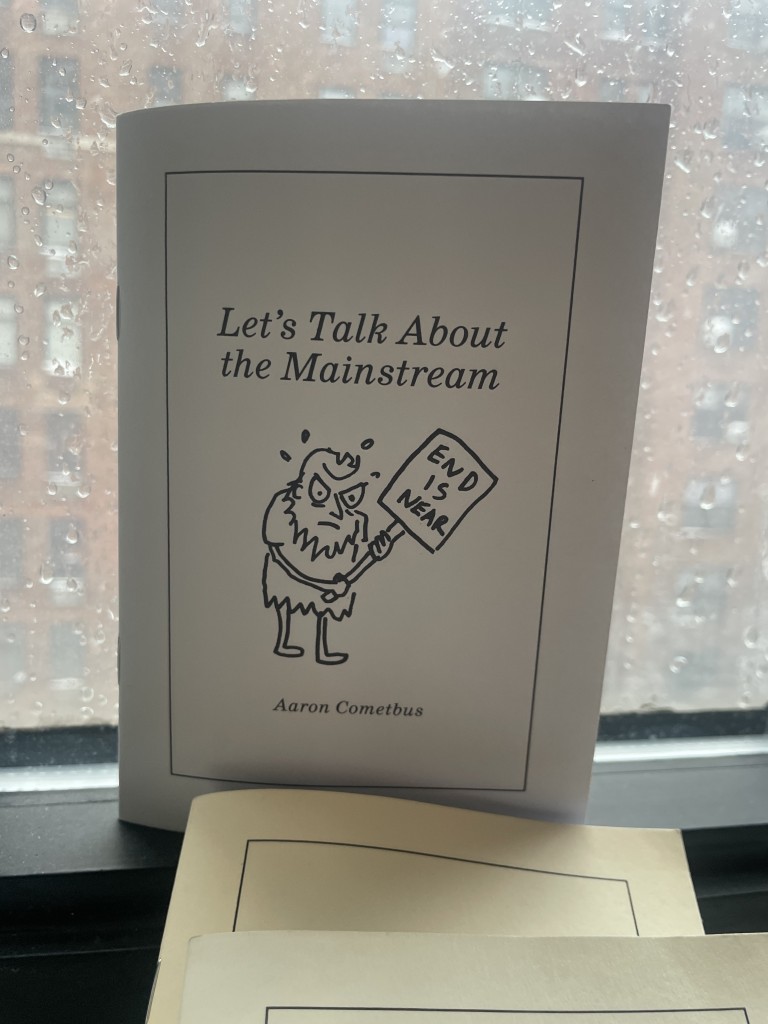
In a sense, the Cometbus drought ends here. The publication’s proprietor, Aaron Cometbus, recently issued a quartet of mini-zines, divided thematically, largely culling previously published pieces that had been scattered to the winds. While not formal issues, the tiny publications bear all the charm readers have come to expect: Monsieur Cometbus’s meticulous writing, his truly independent pearls of wisdom, his casual intellectual swerves, and, for a few pages, his familiar handwritten text. The publications are miniscule in size, but there’s a ton to enjoy. One theme covertly weaving through the zines involves the role of such publications themselves. “It may be hard to believe that in 1989 there was nothing in the small press about how its participants lived,” the editor writes in “Cometbus Mail,” which gathers some letters written to the magazine in the ’80s and ’90s. “The personal was submerged…The gulf between real life and how we expressed ourselves in print was massive, and I wanted to bridge the gap.” (He notes how the independent press has since overcompensated, stressing autobiographies “to the exclusion of all else.”)
Meanwhile, in “Let’s Talk About the Mainstream,” Cometbus writes of print publications morphing into the depressing world of online-only. “Without print, a publication isn’t truly public and can’t maintain its moral authority,” he writes. “It ceases to be a pleasure and becomes just part of the nervous electronic feed that we should all get away from rather than increase.” Cheers. Get thee to a bookstore to find Cometbus’s latest salvos! (In New York? Brave the snow this week and try Codex Books, right across from CBGB and the lovely Bad Brains mural.)
Sound Collector Audio Review
The smart independent music magazine Sound Collector first published in the late ’90s, a period ripe with smart independent music magazines. Sound Collector was a thick, perfect-bound journal with a soft spot for quirky deep dives. (We’ve said this before, but it bears repeating: When virtually every other publication was busy ignoring the burgeoning White Stripes, Sound Collector interviewed them.) In time, a sister publication was spun off—Sound Collector Audio Review, a free newsprint journal devoted to reviews, kind of like a groovy New York Review of Books.
Sound Collector went through periods of extended hiatuses, but recently has enjoyed a welcome return to print. This season brings a handsome new edition: Sound Collector Audio Review issue #8! Freshly available at the entrances of the nation’s better record stores and orderable online, the issue features a slew of sharp essays on varied musical topics. As always, there’s an impressive array of contributing writers (Bob Nickas, Lowbrow alum Michaelangelo Matos) as well as visual artists: Essays are illustrated by enlightened hotshots of the Chelsea gallery ecosystem (Hope Gangloff!) and underground press (Galactic Zoo Dossier’s Steve Krakow!) alike. In a publisher’s note, longtime honcho Laris Kreslins claims this will be the last Sound Collector Audio Review issue. Here’s hoping that it returns yet again in the near future. In the meantime, do whatever is humanly possible to get your hands on Sound Collector Audio Review #8!

Basic Paper Airplane

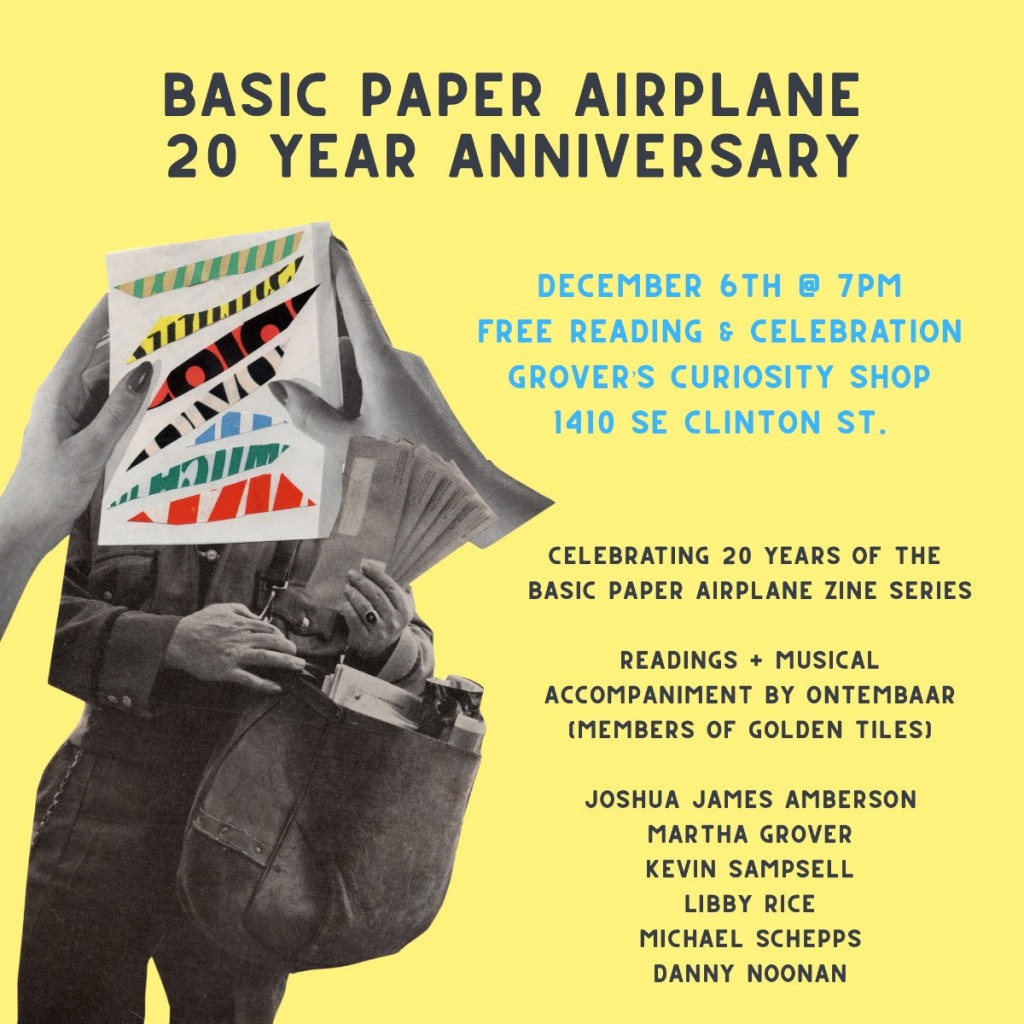
The Portland, Oregon zine Basic Paper Airplane was born in 2005. In the ensuing years, it has issued a series of issues varying by topic but united by the exquisite prose of its editor, Joshua James Amberson. Now, Basic Paper Airplane celebrates its run with a super sharp 20th anniversary edition, “Mailbag.” The issue, #16, features a cluster of writers contributing short essays springing from a few prompts, including 20 (age, stretch of time) and a postcard written to their clueless younger selves back in ’05. Abutting these pieces are essays by Amberson, mostly around on the topic of the mighty, embattled United States Postal Service—that wonderful engine of small publications everywhere.
Basic Paper Airplane is available in smart stores and through Amberson’s lovely distro, Antiquated Future. Buy it today, then buy a second copy tomorrow! Happen to be in the Pacific Northwest? Then, you’re in luck! On Saturday, December 6th, head over to Portland’s own Grover’s Curiosity Shop for a release event, featuring readings by some of the issue’s contributors and music from Ontembaar. Not in Portland? Check out Antiquated Future and snag a copy for your friendly mail carrier to bring, right to your door!
Gabba Gabba We Accept You: Philadelphia Event

“Gabba Gabba We Accept You: The Wondrous Tale of Joey Ramone” is a picture-book biography of our beloved Joey, written by Lowbrow editor Jay Ruttenberg and illustrated by Lucinda Schreiber. It was published earlier this year by Drag City. Buy it today straight through Drag City or even that website that owns Whole Foods! Actually, why don’t you buy a few and give them out to neighborhood children over the holidays?
Except, that is, if you happen to live in Philadelphia! If such is the case, On Saturday, November 29, head directly to the amazing Partners and Son, where the author will be hanging out and signing books. Partners and Son is a fabulous store, and you can pick up a comic, print, or even a T-shirt while you’re there! In fact, the signing falls on Small Business Saturday, and the store will be having a massive kid’s book sale throughout the day. And check this out: the event is being presented by Sound Collector, the wonderful Philadelphia-based music magazine. (We’re pretty sure this is one of the first publications that gave proper, lengthy coverage to the White Stripes.) And do note, Sound Collector Audio Review issue #8 is currently being prepared. Businesses of the world, be on alert: There is still time to purchase ad space in this handsome independent print publication! You can also donate funds. Do check it out—and get thee to Partners and Son on November 29, for all your Gabba Gabba needs.